
NinjaOne consolidates asset and software data across managed devices via its Asset Inventory system. The relevant information for SIM is found in:
- Devices – Contains device and hostname information.
- Installed Applications – Lists software applications, including version and publisher details.
There are now three supported ways to get this data into SIM. We recommend the direct API integration, which lets SIM pull data from NinjaOne automatically with no manual exports.
| Method | Best for | Manual work |
|---|---|---|
| Option 1 – Direct API integration (Recommended) | Ongoing, automated data refresh | None after setup |
| Option 2 – Manual export from the NinjaOne console | One-off imports, or where API access isn't available | Export + import each time |
Prerequisites
Before you begin, ensure the following:
- You have System Administrator access in NinjaOne (required to create a client app under Apps → API).
- Devices are actively reporting and have recent inventory data.
- For manual exports: access to the Reports section.
- (Optional) A working knowledge of PowerShell or command-line tools if using the custom export method.
Option 1: Direct API Integration (Recommended)
This is the standard method. You create a read-only API credential in NinjaOne and paste it into the SIM integration tab. SIM then connects directly to your NinjaOne instance and keeps the software inventory up to date automatically.
Step 1 – Create a client app in NinjaOne
- Sign in to NinjaOne as a System Administrator.
- Go to Administration.
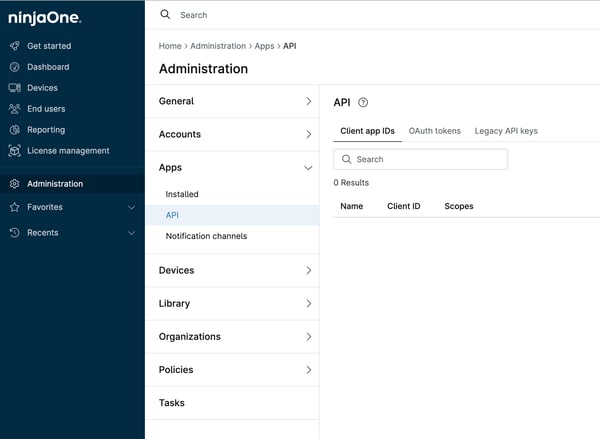
- Open Apps → API.
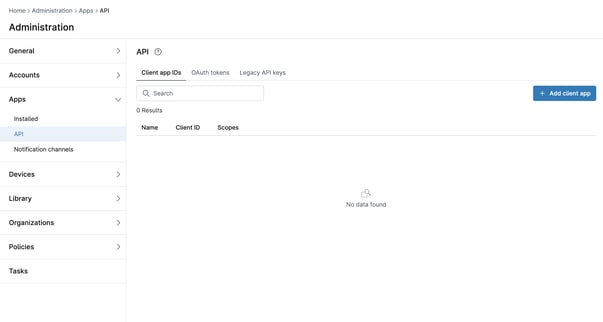
- On the Client app IDs tab, click + Add client app.
- Configure the client app as follows:
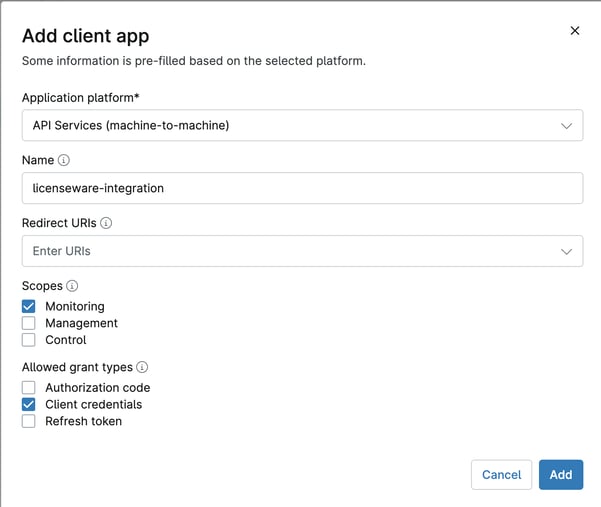
| Field | Value |
|---|---|
| Application platform | API Services (machine-to-machine) |
| Name | licenseware-integration (or any name you'll recognize) |
| Redirect URIs | Leave empty |
| Scopes | Monitoring only |
| Allowed grant types | Client credentials only |
- Click Add.
Notes:
- Monitoring is the read-only scope. It's all SIM needs to read device and software inventory — no Management or Control access is required.
- The Redirect URIs field may appear required until you deselect Authorization code. Since only Client credentials is selected, no redirect URI is needed.
Step 2 – Copy the Client ID and Client Secret
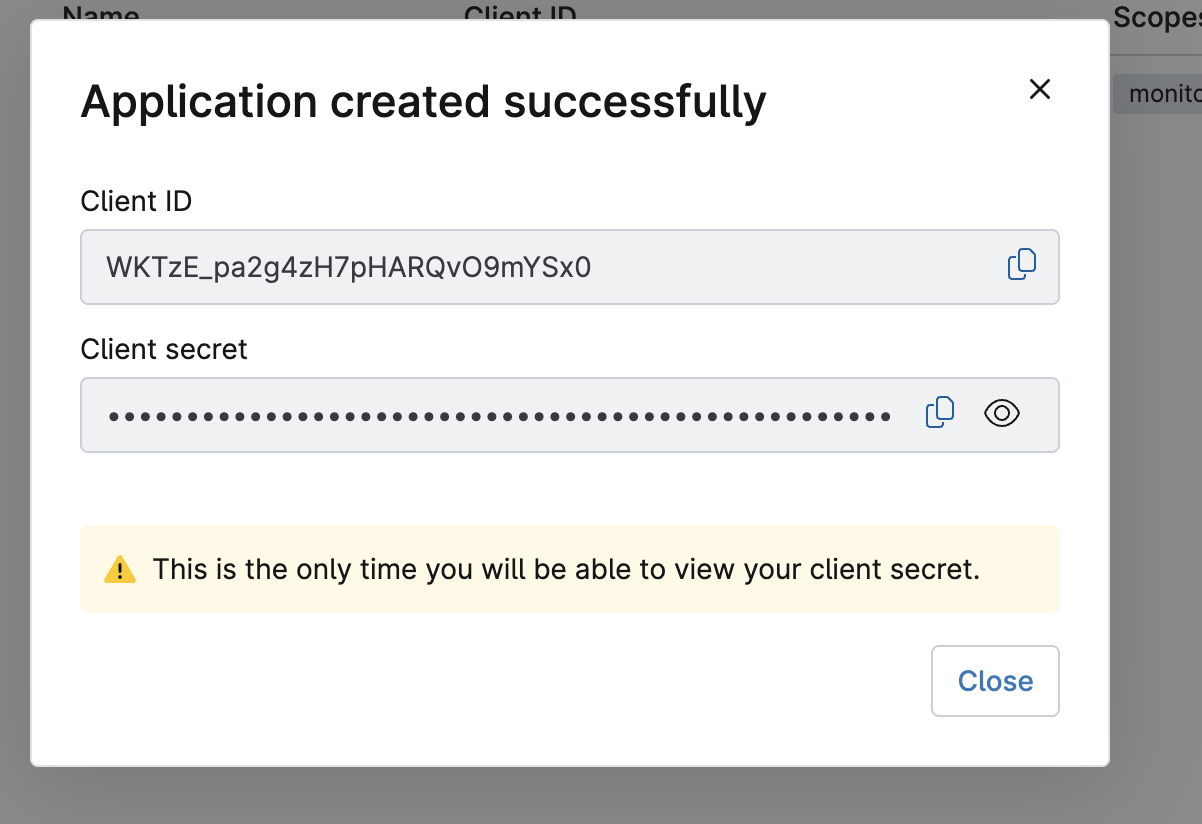
After you click Add, NinjaOne displays the Client ID and Client Secret.
- ⚠️ The Client Secret is shown only once. Copy it immediately and store it somewhere secure.
- The Client ID remains available afterwards in the Client app IDs list.
Step 3 – Find your NinjaOne instance URL
Licenseware needs to know which regional NinjaOne instance to connect to. This is the base URL shown in your browser's address bar while you're signed in to NinjaOne — sometimes called the geolocation URL. It will be one of:
| Region | Instance URL |
|---|---|
| United States | app.ninjarmm.com |
| United States (US2) | us2.ninjarmm.com |
| Europe | eu.ninjarmm.com |
| Canada | ca.ninjarmm.com |
| Oceania | oc.ninjarmm.com |
The integration must use the same regional host as your console. If you pick the wrong region, the connection will fail.
Step 4 – Enter the credentials in Licenseware
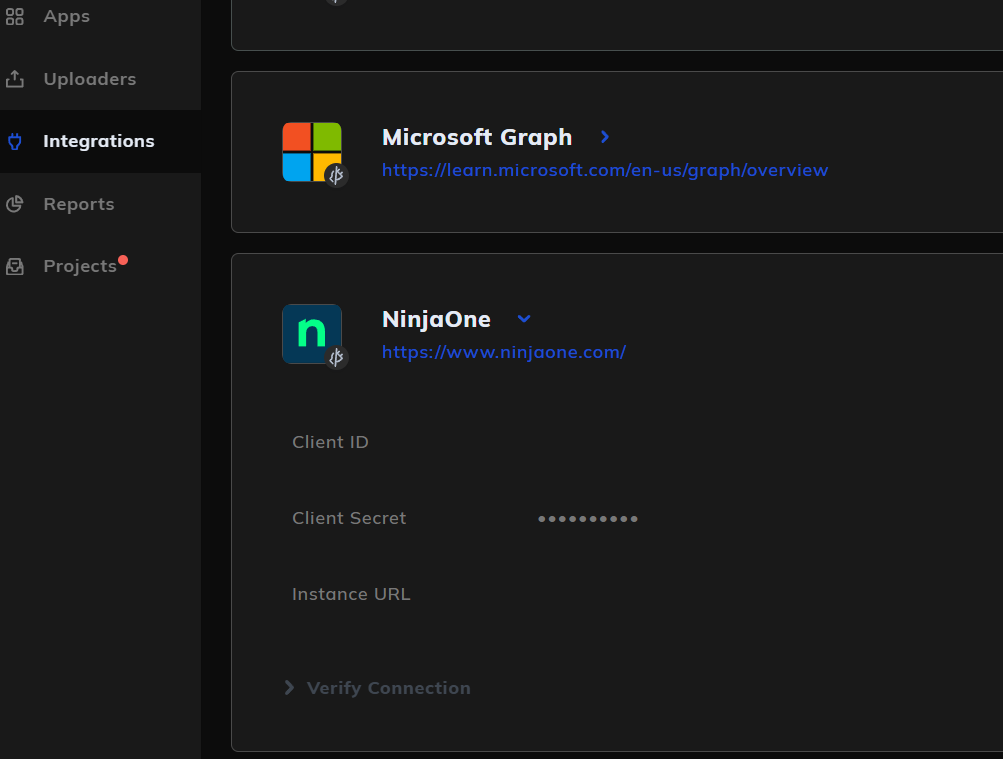
- In Licenseware, select the integration tab and the NinjaOne tile.
- Enter:
- Instance URL – your NinjaOne instance from Step 3
- Client ID – from Step 2
- Client Secret – from Step 2
- Save / connect.
Once connected, SIM authenticates to NinjaOne using the client credentials and pulls device and installed-application data directly. The following fields are mapped automatically:
Option 2: Manual export from the NinjaOne console
Use this method for a one-off import, or where you can't create an API client app.
- Log into the NinjaOne Admin Console.
- Navigate to Reports → Assets → Installed Applications.
- Use the filter options to include all devices (or a specific subset as required).
- Click Generate Report.
- Once the report is displayed, click Export → CSV.
- Save the file (e.g.,
NinjaOne_SIM_Export.csv).
Ensure the following columns are present in your export:
| Field Name | Description |
|---|---|
| Device Name | Hostname or endpoint identifier |
| Application Name | Installed software name |
| Version | Software version number |
| Publisher | Software vendor or publisher |
See SIM template guide for further details for manual ingestion.